 Vegan Recipes
Where plant protein actually comes from
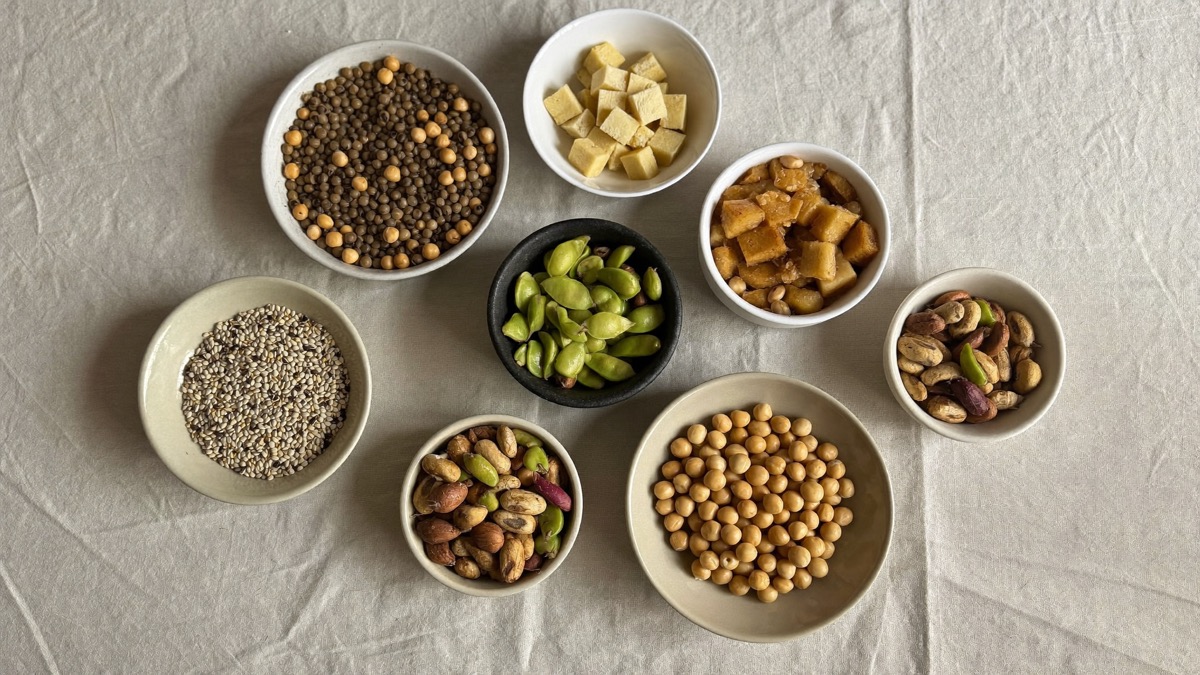
"Where do you get your protein" is the most predictable question in the world and also, awkwardly, a reasonable one — not because plant protein is scarce, but because it is distributed differently and takes a little planning the first month.
The numbers, cooked, per 100g
Cooked weights matter. Dry lentils look impressive on paper and triple in weight once cooked, which is how most tables mislead.
| Food | Protein per 100g cooked |
|---|---|
| Seitan | ~25 g |
| Tempeh | ~19 g |
| Firm tofu | ~12–16 g |
| Edamame | ~11 g |
| Lentils | ~9 g |
| Black beans, kidney beans | ~8–9 g |
| Chickpeas | ~8 g |
| Peanut butter | ~25 g (per 100g, but portions are small) |
| Quinoa | ~4 g |
| Wholemeal pasta | ~5 g |
Quinoa's reputation as a protein food is slightly inflated: it is a good grain with decent protein, not a protein source in the way lentils are.
What "complete protein" actually means
There are nine essential amino acids. A "complete" protein contains useful amounts of all nine. Soy, quinoa and buckwheat are complete on their own; most legumes are lower in methionine, and most grains are lower in lysine.
The traditional advice was to combine them in the same meal — rice and beans, hummus and bread. The current understanding is that this is not necessary within a single meal. The body maintains an amino acid pool across the day, so eating varied protein sources over a normal day covers it. The classic pairings remain good food; they are simply not a rule.
The practical versionEat legumes most days, a grain most days, and some nuts or seeds. That is the whole strategy. Combining at every meal was never the requirement it was presented as.
Hitting a daily target without thinking about it
A common target is roughly 0.8g per kilo of body weight for a sedentary adult, more for someone training. For a 70kg person that is around 56g. What that looks like in ordinary food:
- Porridge with peanut butter — ~12 g
- Lentil soup with bread — ~18 g
- Tofu stir-fry with rice — ~22 g
- A handful of nuts — ~6 g
That is 58g without a supplement, a shake, or any effort beyond eating three normal meals that each contain a legume or soy product.
The nutrients that need more attention than protein
Protein gets the attention; these deserve it more:
- Vitamin B12 — not reliably available from plants. Supplementation or fortified foods are the standard advice, and this one is not optional.
- Iron — plant iron is absorbed less readily. Vitamin C at the same meal improves it substantially, which is why lemon on lentils is more than a flavour choice.
- Omega-3 — flax, chia and walnuts provide ALA; algae oil is the direct source of EPA and DHA.
- Calcium, iodine, vitamin D — worth checking depending on your diet and where you live.
Worth saying plainlyThis is general information, not medical advice. For anything specific — pregnancy, a health condition, a child's diet, or symptoms that concern you — a dietitian or doctor is the right source, and a blood test answers questions that no article can.
Keep reading
What to cook when the fridge looks empty
Seven formulas built from tins and leftovers, plus the ten ingredients that rescue anything.
Read the guide
5 best vegan recipe apps in 2026
What makes a recipe app you cook from rather than scroll — ours included, weaknesses and all.
Read the comparison